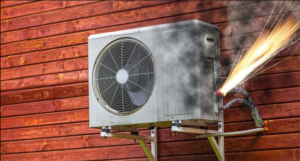
Reducing refrigerant leakage presents an immediate opportunity for Australia’s HVAC&R industry to decrease emissions, enhance system efficiency and manage ever rising costs. While industry discussions have at times, relied on assumptions or overseas studies rather than Australian-specific data, the Refrigerant Leakage Study shows the situation was not as severe as previously feared. In fact, most sectors have reduced leak rates by up to 75% since 2020, highlighting the significant progress already achieved. The study not only fills a long-standing knowledge gap with robust Australian data but also recognises the string work undertaken by industry to improve containment and performance.
To address this gap, the ARBS Foundation alongside Refrigerants Australia, supported the Refrigerant Leakage Study with Refrigerants Australia funding approximately two-thirds of the project. The study is an independent, evidence-based analysis aimed at providing our industry with an accurate picture of refrigerant losses and their scale within Australia.
The study was based on over 20 years of Australian data and validated across multiple applications. This study shifts the conversation from anecdote to evidence-based and has provided the industry with a baseline to help guide decision, investment and best practice.
What the data shows
The study’s key finding is its breakdown of annual refrigerant leak rates by application, reflecting real-world operating conditions in Australia. It found that in stationary air conditioning the leak rates are relatively low. Window and wall units average around 3% per year, while both non-ducted and ducted split systems sit at approximately 4%. Chillers were found to record slightly higher losses at around 5%, which reflects their scale and complexity.
In mobile air conditioning, small systems average 7.5% annually, rising to 9% for larger mobile applications. Exposure to vibration, variable environments, car accidents and long service lives were found to be the major contributors to these higher losses.
Significant leakage was particularly found in the cold chain and refrigeration sector. While domestic refrigeration remains below 1%, and self-contained commercial refrigeration typically ranges from <1% to 3%, systems using remote condensing units average around 15% per year. Independent supermarkets show similar results, while major supermarket chains were found to average 11% annually.
Leakage is highest in heavy-duty applications, with industrial refrigeration and cold storage systems averaging 15%, and road transport and marine refrigeration recording leak rates of approximately 17.5% per year.
Why this matters
Refrigerant leakage is a pressing issue for our industry. In 2022, direct emissions from refrigerant leaks and end of life losses accounted for 6.9 million tonnes of CO₂-equivalent, nearly 10% of Australia’s total refrigerant bank. From 2022 to 2036, cumulative leak emissions are projected to reach 91 million tonnes of CO₂-e, with a further 57.8 million tonnes expected from end-of-life losses if recovery rates do not improve.
Peter Brodribb, Managing Director of Expert Group, “By quantifying refrigerant leakage across Australia’s cooling economy, this study shifts the conversation from anecdote to evidence, showing that leaks and end-of-life losses still account for ~9.6% of the national refrigerant bank and 6.9 Mt CO₂-e of leak emissions in 2022 alone. With ~91 Mt CO₂-e leak emissions projected from 2022 to 2036 and refrigerant prices rising, the industry message is clear: stronger containment, better service discipline, low-GWP transitions and end-of-life recovery are now essential climate, efficiency and cost strategies, not optional operational or compliance tasks.”
Supporting industry-led progress
The ARBS Foundation exists to support initiatives that strengthen the HVAC&R industry through education, research and long-term capability building. By contributing funding to this study, the Foundation has helped deliver a credible resource that supports informed decision-making. The Refrigerant Leakage Study provides a clear baseline that will help to prioritise action, improve performance and track progress over time, equipping industry with the evidence needed to move beyond compliance and lasting improvements.